As an agency founder, your clients trust you with more than design and performance. They trust you with their data, their revenue, and their reputation.
That makes security your responsibility — not just a hosting provider’s, and not just a plugin’s.
Many agencies rely heavily on WordPress security plugins. Plugins help, but they react after WordPress loads.
By then, the request has already reached the site. That’s not prevention. That’s damage control.
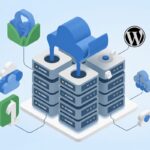
Server-level security works differently. It protects the environment before traffic ever touches WordPress.
It filters bad requests, isolates accounts, controls access, and secures the operating system itself.
Instead of securing one site at a time, you secure the entire foundation your client portfolio runs on.
If you manage multiple sites, this shift isn’t optional. It’s operational risk management.
Still comparing? See our top managed hosting providers for agencies.
What Is Server-Level Security?
Server-level security is protection built into the server itself—the operating system, network layer, firewall rules, user permissions, and resource isolation—not just inside WordPress.
Site-level security, such as plugins, runs after the application loads; server-level security acts before the request ever reaches WordPress.
That difference matters. At the server level, you can block malicious IPs globally, restrict open ports, enforce SSH key authentication, isolate accounts, apply system-wide malware scanning, and configure rate limiting across every site at once.
Instead of installing and managing security settings on 30 individual WordPress dashboards, you define policies once at the infrastructure layer, and they apply everywhere.
If one site is targeted, firewall rules and account isolation prevent the attack from spreading to others.
If a vulnerability appears in a plugin, server rules can limit exploit attempts before they succeed.
For agencies managing multiple revenue-generating sites, this creates consistency, reduces human error, lowers maintenance time, and minimizes the risk of cross-site contamination.
A single-site owner may only worry about one brand. You are responsible for many.
Server-level security acknowledges that scale and treats protection as infrastructure, not an add-on.
Why Agencies Must Prioritize Server-Level Security
Protecting Multiple Revenue-Generating Sites
When you manage multiple client websites, you are managing multiple income streams.
Some of those sites process payments. Some generate leads daily. Some represent established brands.
If one goes down or gets compromised, revenue stops immediately. Server-level security reduces that risk at the infrastructure layer.
Instead of reacting to individual site issues, you create a controlled environment where traffic is filtered, access is restricted, and accounts are isolated by default.
That means fewer weak entry points and fewer chances for attackers to exploit shared resources.
You are not just protecting a website. You are protecting business operations across your entire portfolio.
Reducing Support Tickets and Emergency Fixes
Security incidents create chaos. Malware cleanups, blacklist removals, login issues, and hosting suspensions—these consume time and pull your team away from strategic work.
Most of these emergencies start with preventable vulnerabilities. Server-level firewalls, rate limiting, bot filtering, and strict access controls stop many attacks before they become tickets.
The result is fewer late-night messages and fewer urgent restore requests. This improves internal efficiency.
Your team spends more time building and optimizing, and less time firefighting.
Maintaining Reputation and Client Trust
Clients rarely understand technical details. They judge outcomes.
If their site gets hacked, they question your competence—even if the root cause was a weak password or outdated plugin.
Server-level security allows you to standardize protection across all projects. That consistency strengthens your positioning.
You can clearly explain your security framework during onboarding and show that protection is built into your infrastructure, not added as an afterthought.
Preventing Large-Scale Breaches Across Accounts
One of the biggest risks agencies face is cross-site contamination. On poorly configured hosting, a compromise on one account can expose others.
This is where server-level isolation becomes critical.
Proper user separation, containerization, file permission controls, and restricted process access prevent lateral movement between sites.
Even if one site is breached, the damage remains contained. For agencies managing dozens of sites, containment is not optional. It is risk control at scale.
Core Components of Server-Level Security
Web Application Firewall (WAF)
A Web Application Firewall sits in front of your server and inspects incoming traffic before it touches WordPress.
Think of it as a gatekeeper. It analyzes requests and blocks known malicious patterns such as SQL injection, cross-site scripting, and exploit attempts targeting common plugins.
This happens before PHP executes. That reduces server load and prevents many attacks from reaching the application layer at all.
A properly configured WAF also enforces rate limiting. If a single IP sends hundreds of requests in seconds, the system slows or blocks it automatically.
This stops automated scripts and bot-driven attacks from overwhelming login pages or API endpoints.
Bot protection goes further by filtering known bad user agents and suspicious traffic patterns. The result is cleaner traffic and fewer attack vectors reaching your sites.
Server Firewalls
A server firewall operates at the network level. It controls which ports are open and which IP addresses are allowed to connect.
If a service does not need public access, it should not be exposed. Closing unnecessary ports immediately reduces your attack surface.
IP filtering allows you to block known malicious regions or repeat offenders across all sites at once. It also lets you whitelist trusted IPs for sensitive access points such as SSH.
Brute-force attacks often target login services repeatedly. A firewall can detect excessive login attempts and automatically block the source.
That protection applies globally, not just to one WordPress install.
Malware Scanning at Server Level
Server-level malware scanning monitors files across all hosted accounts, not just within WordPress directories.
It scans core files, uploads, themes, and system paths for suspicious code patterns.
Because it operates outside the application, it can detect modifications even if WordPress itself is compromised.
Real-time monitoring means changes are reviewed as they happen. If a malicious file is uploaded or injected, alerts trigger immediately.
Automatic threat detection can quarantine infected files or restrict execution until reviewed. This shortens response time and limits damage.
You are not waiting for a client to report strange behavior. The system flags it first.
DDoS Protection
Distributed Denial-of-Service attacks attempt to overwhelm your server with traffic. Without protection, even legitimate users cannot access the site.
Server-level DDoS protection filters traffic before it consumes server resources. Suspicious spikes are analyzed and filtered automatically.
Traffic filtering separates real visitors from malicious floods.
Load balancing distributes incoming traffic across multiple resources when available, preventing a single point of failure.
Mitigation systems absorb abnormal traffic volumes and maintain uptime.
For agencies managing multiple business-critical sites, uptime stability directly protects client revenue and your credibility.
Secure User & Access Management
Access control is one of the most overlooked areas of server security. SSH key authentication replaces password-based logins with cryptographic keys.
This makes unauthorized access significantly harder. Even if someone guesses a username, they cannot log in without the private key.
Disabling direct root login adds another layer of protection. Administrative access should require escalating privileges from a standard user account.
This creates an audit trail and reduces the impact of compromised credentials. The least privilege principle ensures each user only has the permissions required for their role.
Developers, content managers, and system admins should not share the same level of access. Restricting permissions limits damage if an account is breached.
Automatic Server Patching & Updates
Outdated software is one of the most common attack vectors. Operating system updates patch known vulnerabilities in core services.
Delaying them leaves your server exposed to exploits that attackers already understand.
Automatic patching ensures security fixes are applied consistently without relying on manual intervention.
PHP and database updates are equally important. Vulnerabilities in runtime environments can compromise every hosted site at once.
Keeping these components current reduces systemic risk. Updates should be tested in staging when possible, but they should not be ignored.
Consistent patch management turns security from a reactive task into a controlled process.
Hosting-Level Security vs Plugin-Based Security
Security plugins operate inside WordPress, which means they activate only after a request reaches the application layer; by that point, server resources have already been used, and certain attack vectors may already be in motion.
They scan files, monitor logins, and block suspicious behavior, but they are inherently reactive because they depend on WordPress running properly to detect and respond to threats.
If WordPress is disabled, corrupted, or exploited at a deeper level, the plugin may not even execute.
Hosting-level security works differently. It filters and controls traffic before it touches WordPress, enforces firewall rules at the network level, isolates accounts at the system level, and manages permissions at the operating system level.
That means malicious traffic can be blocked before PHP processes it, brute-force attempts can be stopped before login pages load, and cross-site access can be restricted before files are exposed.
This is proactive protection because it reduces the attack surface and prevents execution rather than cleaning up afterward.
That said, it is not an either-or decision. Server-level security builds the foundation. Plugins add visibility and application-specific controls inside WordPress.
When combined, you get layered security: infrastructure blocks broad threats, while plugins monitor site-specific behavior.
For an agency managing multiple client sites, that layered model provides depth, redundancy, and operational stability.
Multi-Site & Agency Hosting Considerations
When you host multiple client sites under one infrastructure, the biggest risk is shared exposure. Account isolation is the first control to examine.
Each site should run under its own system user, with separate file permissions and restricted process access.
That way, if one site is compromised, the attacker cannot automatically browse or modify neighboring accounts.
Without isolation, a single vulnerable plugin can become a portfolio-wide problem.
Container-based environments take this further by separating each site at the operating system level.
Instead of simply dividing folders, containers allocate dedicated resources and runtime environments for each site.
CPU, memory, and processes are segmented. This limits both security risks and performance spillover.
If one site experiences a spike in traffic or a malicious attack, it does not drain resources from others.
Preventing cross-site contamination is the real objective.
That means strict permission controls, disabled shared write access, secure database separation, and no global admin shortcuts that bypass boundaries.
In practical terms, you want a setup where a breach remains contained to one environment, with no lateral movement possible.
For an agency, containment is the difference between a single support case and a reputational crisis.
Backup & Disaster Recovery at Server Level
Automated Daily Backups
Backups are not optional. They are your safety net when prevention fails. At the server level, backups should run automatically without relying on individual site owners to trigger them.
This includes full file systems and databases. Daily backups are the minimum standard for most agency portfolios.
For high-transaction sites, more frequent backups may be necessary. Automation removes human error.
No one forgets. No one skips a step. The system captures consistent restore points across all client sites.
Off-Site Backups
A backup stored on the same server is not a true backup. If the server is compromised, corrupted, or physically fails, local backups may be lost as well.
Off-site backups solve this by storing encrypted copies in a separate location. This could be a different data center or cloud storage provider.
The key principle is separation. Even in a worst-case scenario—ransomware, hardware failure, or provider outage—you still retain clean data.
For agencies, this protects continuity across your entire client base.
One-Click Restores
Speed matters during an incident. Manual restores are slow and increase the risk of mistakes.
One-click restore functionality allows you to roll a site back to a previous stable version within minutes.
This reduces downtime and limits client disruption. Ideally, restores should work at both the site and server level.
That flexibility allows you to recover a single account without affecting others. Fast recovery protects revenue and reduces stress during critical moments.
Testing Restore Points
A backup is only useful if it works. Testing restore points ensures the data is complete and usable.
This means periodically restoring backups to a staging environment and confirming functionality.
Files should load correctly. Databases should connect properly. No missing assets. Without testing, you are relying on assumptions.
For agencies, documented restore testing builds confidence and reduces uncertainty during real incidents.
Disaster recovery is not just about having copies. It is about knowing you can recover quickly and reliably.
Monitoring & Logging
Security is not just about blocking threats; it is about visibility. Real-time server monitoring gives you a live view of CPU usage, memory consumption, disk activity, and unusual process behavior across your infrastructure.
If a site suddenly spikes in resource usage or a process behaves abnormally, you see it immediately.
That early signal often reveals attacks, misconfigurations, or failing services before clients notice.
Uptime monitoring adds another layer. It checks your sites at regular intervals from external locations and alerts you if a site becomes unreachable.
This confirms availability from a user’s perspective, not just from inside the server. Fast alerts allow you to respond before downtime turns into lost revenue or support complaints.
Activity logs and audit trails complete the picture. Every login attempt, file modification, permission change, and system event should be recorded.
Logs provide traceability. If something goes wrong, you can identify what happened, when it happened, and which account was involved.
For agencies, this reduces guesswork and speeds up resolution. Monitoring tells you something is happening. Logs tell you why.
Together, they turn security from reactive troubleshooting into controlled oversight.
Common Security Mistakes Agencies Make
Using Shared Hosting for Client Sites
Shared hosting is attractive because it is inexpensive and simple to set up. The problem is that shared environments often lack strong account isolation.
Multiple websites run under the same system resources, and in poorly configured setups, a compromise on one account can expose others.
Performance can also degrade if another tenant on the server consumes excessive resources. For an agency managing client businesses, this creates unnecessary risk.
Lower cost at the infrastructure level can translate into higher long-term costs in cleanup, downtime, and reputation damage.
If you are responsible for multiple brands, the hosting foundation must reflect that responsibility.
Giving Full Admin Access to Everyone
It may feel convenient to grant full admin or root-level access to team members and clients. It reduces friction in the short term.
However, broad access increases the chance of accidental misconfiguration, deleted files, or unauthorized changes.
From a security perspective, every additional privileged account becomes a potential entry point.
Access should match role requirements. Developers need certain permissions. Content editors need fewer. Clients rarely need server-level access.
Limiting privileges reduces risk without slowing down operations when structured properly.
Ignoring Staging Security
Staging environments are often treated as temporary and less important. That mindset creates exposure.
Staging sites frequently contain real data, active plugins, and administrative access.
If they are publicly accessible and not protected by authentication or firewall rules, they become easy targets.
Attackers often look for weaker environments connected to production systems.
Proper staging security includes restricted access, blocked search engine indexing, and the same baseline protections applied to live sites.
Temporary does not mean exempt from security standards.
Not Enforcing Strong Passwords or 2FA
Weak passwords remain one of the most common attack vectors.
Without enforced password policies, users may choose simple combinations that automated tools can quickly guess.
Two-factor authentication adds a second verification layer, making stolen credentials far less useful.
Enforcement must be systematic. Relying on individual discipline is unreliable.
When strong passwords and 2FA are mandatory across server access, WordPress logins, and administrative panels, you significantly reduce the likelihood of unauthorized access.
Best Practices for Agencies
Standardized Hosting Stack
Choose one primary hosting environment and stick to it unless there is a clear reason not to.
This includes server configuration, firewall setup, PHP versions, backup systems, and monitoring tools.
Standardization reduces configuration drift. Your team knows exactly how each environment is built, which speeds up troubleshooting and reduces mistakes.
It also allows you to document and refine one security framework instead of juggling multiple variations.
Over time, this creates operational stability and predictable security outcomes.
Limited Admin Access
Access should be intentional, not convenient. Grant permissions based on role requirements, not job titles.
Developers may need elevated access, but content editors and clients rarely require server-level privileges.
Remove unused accounts promptly. Enforce SSH key authentication for server access and enable two-factor authentication wherever possible.
Limiting admin access reduces the number of high-risk entry points. Fewer privileged accounts mean fewer opportunities for misuse or compromise.
Security Checklists for Onboarding
Every new client should go through a structured security onboarding process.
This can include verifying hosting configuration, enforcing password policies, enabling backups, configuring firewalls, and restricting unnecessary plugins.
A checklist prevents oversight. It ensures that no site goes live without meeting your minimum security standards.
Documentation also makes delegation easier. Any team member can follow the same framework and achieve consistent results.
Regular Security Audits
Security is not a one-time setup. It requires periodic review. Schedule audits to evaluate user access, firewall rules, software versions, backup integrity, and log activity.
Look for outdated components, unused accounts, and configuration changes that may introduce risk.
Audits identify small issues before they escalate. For agencies, regular reviews reinforce discipline and demonstrate proactive management.
Security becomes part of your operating rhythm, not just a reaction to incidents.
Choosing the Right Hosting Partner
Managed WordPress Hosting vs VPS vs Cloud
Managed WordPress Hosting is structured for convenience. The provider handles updates, server configuration, backups, and basic security controls.
This works well if you want reduced operational overhead and standardized environments.
The trade-off is limited customization. You rely heavily on the provider’s security policies.
VPS (Virtual Private Server) gives you more control. You manage the firewall, patching, user permissions, and monitoring.
This flexibility allows stronger customization but requires technical discipline. Without clear processes, misconfiguration becomes a risk.
Cloud Infrastructure (such as scalable virtual environments) provides flexibility, redundancy, and resource scaling. It is powerful for agencies managing growth or high-traffic sites.
However, cloud security is not automatic. It requires proper network configuration, access controls, and monitoring setup.
The platform provides tools. Your team must implement them correctly.
What Security Features to Look For
Evaluate infrastructure-level protections first.
Look for strong account isolation, server-level firewalls, Web Application Firewall integration, automated backups with off-site storage, DDoS mitigation, and proactive monitoring.
Confirm how updates are handled. Ask whether operating system patches and PHP updates are automated and tested.
Review access management options, including SSH key authentication and role-based permissions.
Also assess transparency. You should have access to logs, resource monitoring, and backup restore controls.
If visibility is limited, you are operating without insight. For an agency, that is operational risk.
Questions to Ask Hosting Providers
Ask direct, technical questions.
- How are client accounts isolated from one another?
- What happens if one site is compromised?
- How are backups stored, and how quickly can they be restored?
- Are firewall rules customizable?
- How are OS and PHP updates managed?
- What monitoring and alerting systems are in place?
The quality of the answers matters as much as the features themselves. Clear, specific responses indicate structured processes. Vague responses suggest reactive security.
Final Thoughts
Server-level security is not just technical protection. It is a business decision.
Agencies that build security into their infrastructure operate with fewer emergencies, fewer surprises, and stronger client confidence.
That consistency becomes a competitive advantage.
Proactive protection costs less than reactive recovery.
Downtime, malware cleanup, lost trust, and reputation damage are far more expensive than prevention.
When security is built into the server layer, risk is reduced across every site you manage.
Treat security as infrastructure, not an add-on service.
Build it into your hosting decisions, onboarding process, and daily operations. When the foundation is secure, everything else runs smoother.
To simplify things, check our agency hosting overview guide.
FAQs
Is server-level security enough on its own?
No. It provides strong foundational protection, but layered security is safer. Application-level controls inside WordPress still add value.
Do I still need WordPress security plugins?
Yes, in most cases. Plugins help with login monitoring, file changes, and site-specific rules that complement server-level controls.
Is VPS more secure than shared hosting?
It can be, but only if configured properly. A poorly managed VPS can be less secure than well-managed hosting with strong isolation.
How much should agencies invest in security?
Enough to prevent downtime and large-scale breaches. Security should be budgeted as infrastructure, not treated as an optional add-on.
Can server-level security improve SEO?
Indirectly, yes. Strong security reduces downtime, malware flags, and blacklisting, which helps maintain search visibility and site trust.